From root ball removal and stump excavation to site grading after land clearing, BF Tree Removal Experts provides excavation services that complement our full range of tree care work on Connecticut residential and commercial properties. Our experienced crew and proper equipment deliver precise, efficient excavation that prepares Connecticut sites for their next phase of development or landscaping.
OF EXPERIENCE
EMERGENCY RESPONSE
FREE ESTIMATE
Excavation work in Connecticut requires careful coordination with underground utility mapping, local permitting requirements, and site conditions that vary significantly across the state’s geology. Connecticut’s landscape includes shallow bedrock in many areas, glacial till deposits that contain boulders and cobbles, and variable drainage conditions that affect how excavation work proceeds and what equipment is appropriate for a given site. Experience with Connecticut’s specific ground conditions is an important factor in selecting an excavation contractor.
BF Tree Removal Experts’ excavation services are closely integrated with our tree care work. We regularly perform excavation as part of larger property projects that begin with tree removal and land clearing. Stump and root ball removal by excavation, site grading after clearing, soil removal and fill work, and trench excavation for drainage improvements are the most common applications we handle for Connecticut residential and commercial property owners.
Every excavation project begins with Connecticut Dig Safe notification and utility marking before any digging begins. This is a legal requirement in Connecticut for excavation deeper than a defined threshold, and it protects property owners and crews from the serious safety hazards and property damage that result from striking buried utility lines during excavation work. We coordinate Dig Safe marking as a standard part of our project preparation process.
Some Connecticut stump situations are better addressed by excavation than by grinding. Large root balls left by uprooted trees, stumps with extensive surface root systems that would require multiple grinding passes, and stumps in locations where a grinding machine cannot safely access are all candidates for excavation removal. Excavating the stump and root ball removes the entire woody mass from the soil in one operation, leaving a clean void that can be backfilled and graded.
Root ball excavation is frequently required after Connecticut storm damage. When a large tree topples and the root plate lifts from the ground, it creates an upturned mass of soil, roots, and wood that can be six to ten feet in diameter and several feet tall. Grinding this material is impractical and time-consuming. Excavating the root ball, cutting it free from the trunk, and removing it from the site is the most efficient solution, leaving the soil void ready for compacted fill and final grading.
For Connecticut homeowners planning new construction or landscape improvements in areas where tree stumps and root systems exist below grade, excavation to remove root material prevents the long-term settlement and drainage problems that occur when buried wood decomposes and creates voids in the soil. We excavate to the depth required to remove the majority of root mass, backfill with appropriate material, and compact to the specifications required for the planned use of the area.
After land clearing on a Connecticut property, the disturbed ground surface often requires grading to achieve the drainage and level conditions needed for the intended use. Clearing operations remove vegetation that was stabilizing surface soils, and the equipment used during clearing can create uneven surfaces and low spots that collect water. Grading work performed promptly after clearing establishes the proper drainage pattern before the site is exposed to Connecticut’s rain events.
Topsoil management is a critical part of post-clearing grading on Connecticut properties. The thin topsoil layer that exists in many Connecticut soils is easily buried under subsoil displaced by clearing equipment or lost entirely if not protected. We strip and stockpile topsoil before major grading operations, reapplying it as a finish layer over compacted subgrade when the final grades are established. This preserves the organic-rich topsoil layer that is essential for successful lawn and landscape establishment.
Drainage improvement excavation is frequently required on Connecticut properties where clearing has revealed low spots, compacted areas, or drainage patterns that direct water toward foundations or landscape features. We excavate for drainage swales, dry wells, and French drain systems that redirect surface and subsurface water appropriately for Connecticut’s precipitation patterns. Proper drainage established at this stage prevents the foundation moisture, lawn disease, and landscape damage that poor drainage causes over time.
Connecticut’s geological variability makes excavation work genuinely complex. Shallow bedrock encountered unexpectedly can stop a project, require blasting permits, or necessitate complete redesign of a grading or drainage plan. Glacial boulders buried at various depths are common across the state and require specific equipment and techniques to extract or work around. An excavation contractor familiar with Connecticut’s ground conditions brings realistic expectations and problem-solving experience to situations that would stop a less experienced crew.
Environmental regulations in Connecticut apply to excavation work near wetlands, wetland buffers, and floodplains. Disturbing soil within regulated areas without required permits violates Connecticut’s inland wetlands statutes and can result in significant restoration requirements and fines. We identify regulated area boundaries during project planning and advise on the permit requirements that apply to your specific Connecticut site before any excavation work begins.
Quality backfill and compaction are what separate a professional excavation from a liability. Connecticut’s frost depth — typically 36 to 48 inches in most of the state — means that improperly compacted backfill will heave and settle repeatedly through freeze-thaw cycles, creating uneven surfaces, drainage problems, and structural issues in paving and hardscaping installed over the disturbed area. We compact backfill in lifts, using appropriate material and technique for Connecticut’s frost conditions.
Professional excavation in Connecticut requires the right equipment, the right experience with local geology, and the right regulatory knowledge. Here is what our service delivers.
From root ball removal to full site grading, our Connecticut excavation crew is ready to prepare your property for its next phase. Get your free estimate today.
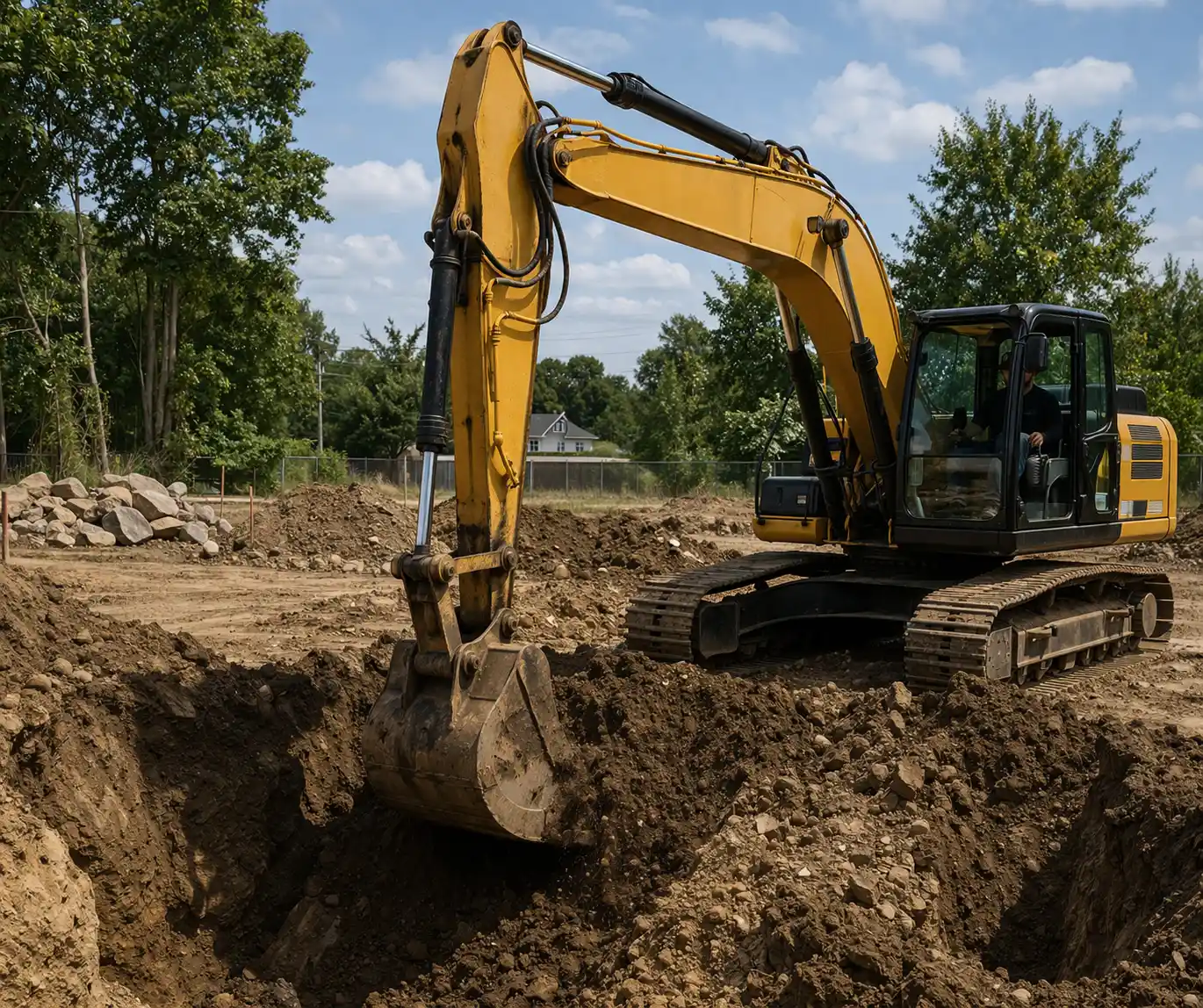
We provide root ball and stump excavation, site grading and soil work after land clearing, topsoil management, drainage improvement excavation including swales and French drains, and backfill and compaction work on Connecticut residential and commercial properties. All excavation projects include Connecticut Dig Safe coordination before work begins.
Excavation cost in Connecticut depends on the scope of work, depth of excavation, soil and bedrock conditions, and equipment required. Site grading projects are priced by area and volume of material moved. We provide free on-site written estimates for all excavation work after assessing your specific Connecticut site conditions.
Permit requirements for Connecticut excavation depend on the location, depth, and nature of the work. Excavation near wetlands or their regulated buffers requires permits from the local inland wetlands commission. Some Connecticut municipalities require permits for significant grading or soil disturbance above a threshold area. We advise on applicable requirements during the free site assessment.
Yes, with care. Excavation within the root zone of Connecticut trees intended for preservation requires careful hand digging or air spading techniques to avoid cutting major roots. We assess the proximity of preserved trees to the excavation area during planning and adjust our approach to protect root systems while completing the required excavation work.
Yes. BF Tree Removal Experts LLC is fully licensed and insured for excavation services in Connecticut. We carry liability coverage, workers compensation, and appropriate equipment insurance for all excavation operations. Proof of insurance is available on request before any excavation work begins on your Connecticut property.
No obligation. 2 hours response.
We carry full licensing and insurance for excavation work across Connecticut, including proper coverage for equipment operations on residential and commercial sites.
We coordinate Connecticut Dig Safe notification on every excavation project as a standard step, protecting utilities and your property from excavation damage.
We walk your Connecticut site, assess the full scope of excavation needed, and provide a complete written estimate before any digging begins.
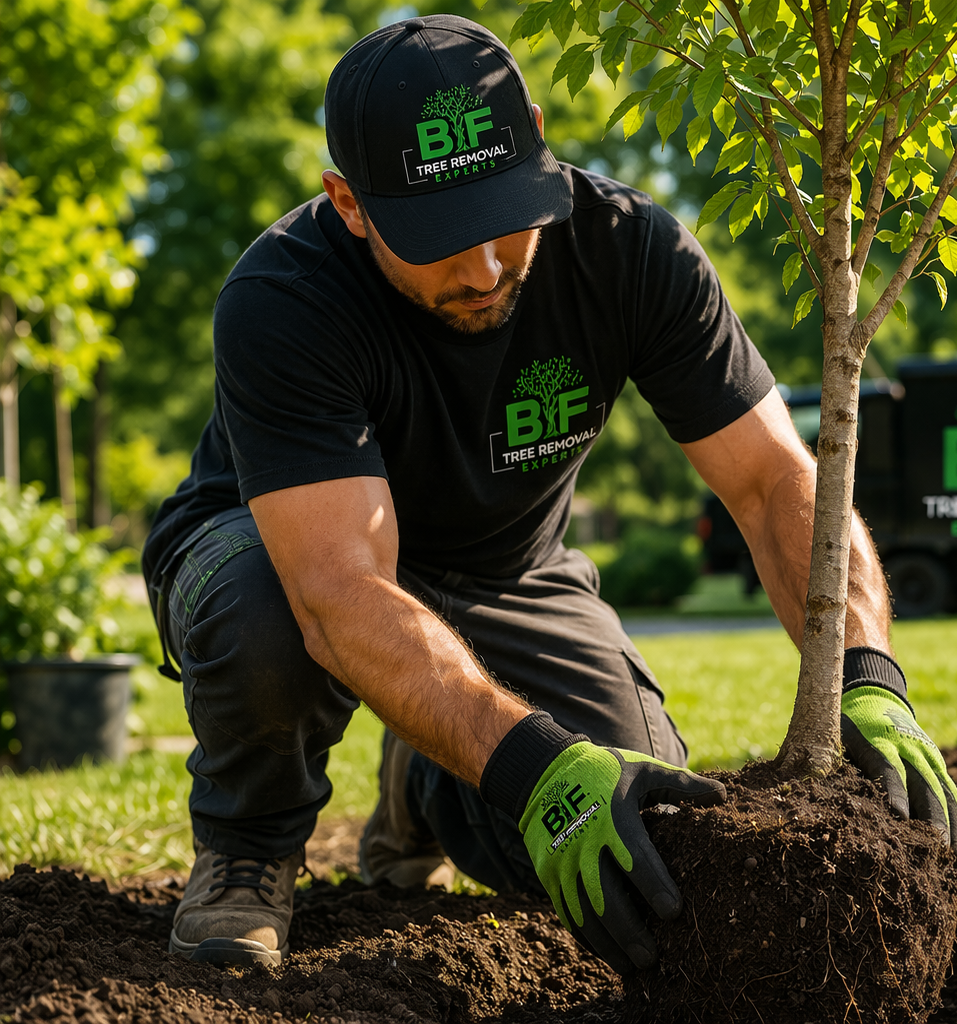
BF Tree Removal Experts provides professional excavation services to residential and commercial properties across Connecticut. Whether you need root ball removal, post-clearing grading, or drainage improvement excavation, our licensed and insured crew serves communities statewide. Contact us for a free on-site estimate for your Connecticut excavation project.
Don’t see your city? We serve communities throughout Connecticut. Contact us to confirm service in your area.